


The Pharmacognosy of Festive Prescriptions in Western Herbal Traditions
As we approach the Dong Zhi (Winter Solstice) season, our focus turns to supporting patients’ Yang Qi and guarding against Han Xie (Cold Pathogen). It’s a poignant time to observe how traditional European winter cuisine, particularly Christmas foods, intuitively applied herbal principles that align closely with our own pharmacopeia. These recipes can be seen as historical, community-wide Zhong Yao formulas for the season. Let’s analyse a few key examples through a clinical lens.
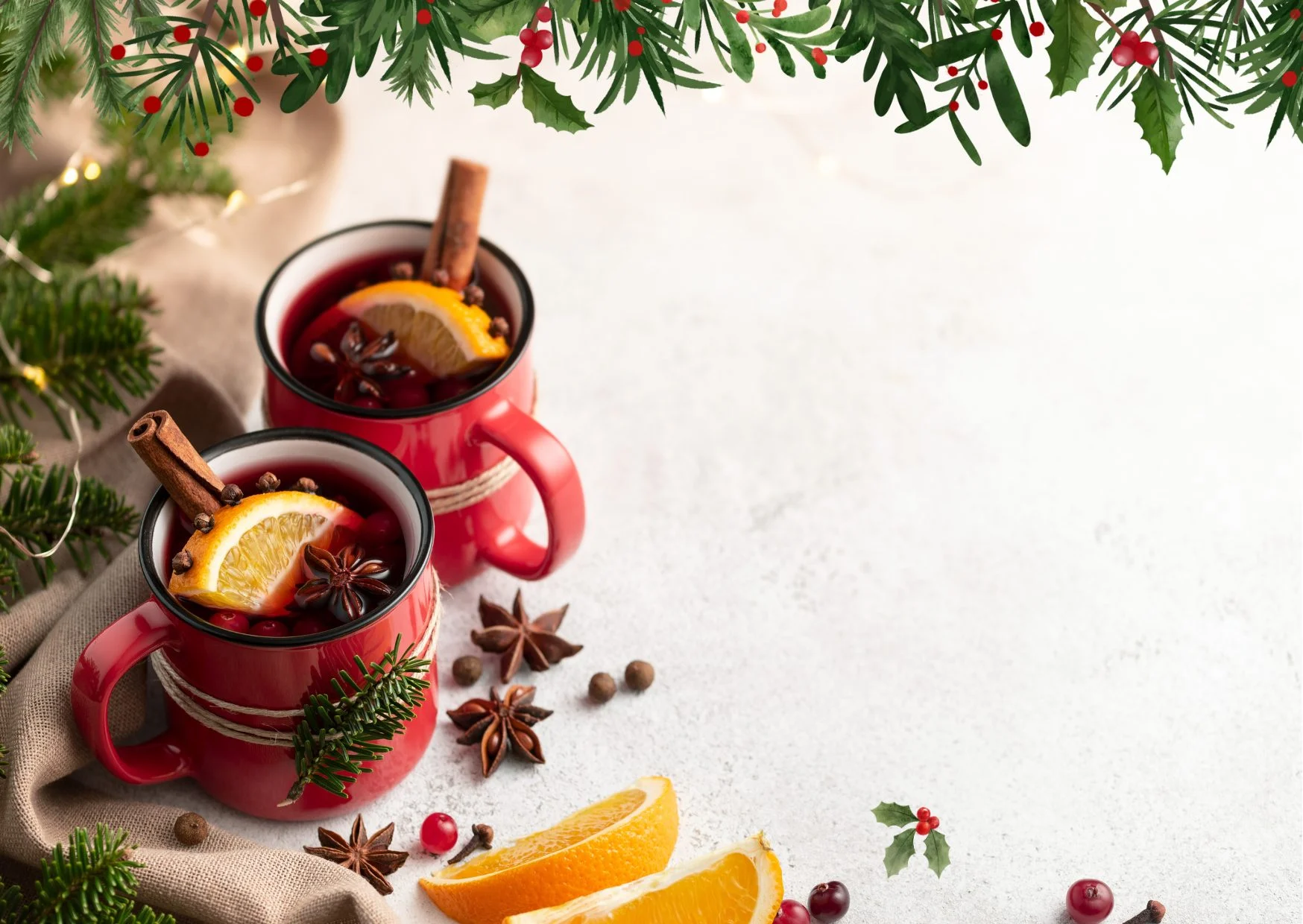
Mulled Wine (Glühwein): A Wen Li (Warm the Interior) Decoction This staple is essentially a Xie Fu (Drive Out Cold) formula. Cinnamon Bark (Rou Gui), the chief herb, strongly warms Kidney and Spleen Yang, invigorates blood (Huo Xue), and guides fire back to its source. Cloves (Ding Xiang), a key deputy herb, warms the Middle Jiao, directs Qi downward to stop vomiting, and has potent antimicrobial properties—crucial in eras before refrigeration. The wine itself acts as a Yin vehicle to efficiently disperse the herbs’ Yang and warming properties to the extremities. The traditional addition of bitter orange peel (Chen Pi variant) regulates Qi and mitigates cloying.
Christmas Pudding & Spiced Cake: A Jian Pi (Fortify the Spleen) Strategy These dense, sweet, and fatty foods pose a challenge to Spleen Yang and digestion. The herbal mix within is a clever countermeasure. Nutmeg (Rou Dou Kou), in small doses, warms the Spleen, astringes intestines, and prevents the leakage of Qi from excessive richness. Allspice (Jamaican Pepper) functions as a carminative, moving Qi and relieving distension. Ginger (Sheng Jiang), often present, harmonises the Middle Jiao and mitigates the cold, damp nature of dried fruits. This is a culinary example of a Xiao Dao (Digestive) formula embedded within the food itself.
Sage & Onion Stuffing: A Qing Re (Clear Heat) and Hua Tan (Transform Phlegm) Combination Paired with rich, fatty meats like goose or pork, this stuffing demonstrates a balancing act. Sage (Salvia officinalis) mirrors some properties of Dan Shen; it clears heat, has mild circulatory benefits, and its volatile oils aid in cutting through Tan Yin (Phlegm-Damp) generated by rich foods. The onion (a Cong Bai analogue) releases the exterior and promotes digestion. Together, they prevent the stagnation of food (Shi Ji) and transform turbidity.
These festive traditions underscore a universal principle: that seasonal wellness is rooted in supporting Yang, moving Qi, and aiding the Spleen’s transformation. It is a reminder that our medicine is part of a global tapestry of intuitive health practices.
Let us know your clinical observations on this intersection of tradition and practice this Christmas.
Share:
Related Posts

Acupuncture, Breast Cancer and the Menopause Nobody Warns You About
Not so long ago, I was the one sitting in the chemo chair. I’ve spent years supporting women through their hormones, from periods and fertilityright

Meet Our Members: Discover Qualified Degree-Level Acupuncturists Across the UK
At the Association of Acupuncture Clinicians (AAC), we’re proud of our members and the experience, knowledge and range of treatments they offer. That’s why we’re

Ancient Practice, Modern Connections: Introducing the AAC WhatsApp Channel
Acupuncture has a long history, but the ways we share knowledge, learn from one another and connect with the wider world continue to evolve. At

Bringing Acupuncturists Together: Building Connections Across the AAC
Being an acupuncturist can sometimes feel like a solitary profession. Whether you work from your own clinic, share a space with other practitioners or work

Amazing Opportunity – Join The Clinician Editorial Team
Do you have a passion for acupuncture, plenty of ideas and enjoy connecting with people? We’re looking for a proactive new member to join the